Humanoid robots for research
Research platforms are the humanoids you can buy today. They trade polish for open SDKs, simulation models and lower prices.

| # | Robot | Status | Price | Rating |
|---|---|---|---|---|
| 01 | Purchasable | $399 | ||
| 02 | Purchasable | $4,900 | ||
| 03 | Purchasable | From $4,999 | ||
| 04 | Purchasable | From CN¥39,000 | ||
| 05 | Discontinued | $10,999 | ||
| 06 | Purchasable | CN¥88,000 | ||
| 07 | Purchasable | $13,500 | ||
| 08 | Purchasable | $16,990 | ||
| 09 | Purchasable | From CN¥158,000 | ||
| 10 | Purchasable | From €22,500 | ||
| 11 | Superseded | $30,000 | ||
| 12 | Purchasable | Reported $70,000 | ||
| 13 | Purchasable | $80,000 | ||
| 14 | Purchasable | $89,999 | ||
| 15 | Purchasable | $125,000 | ||
| 16 | Prototype | Not for sale | ||
| 17 | Superseded | Not for sale | ||
| 18 | Commercial deployment | Not public | ||
| 19 | TI | Superseded | Not for sale | |
| 20 | Prototype | Not for sale | ||
| 21 | Purchasable | Not public |






















The robots, one by one
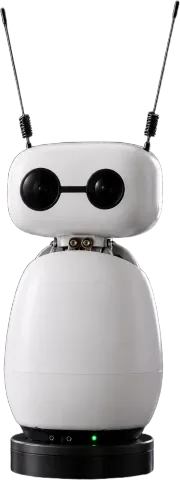
summary from sourced evidenceReachy Mini
$399Reachy Mini is a small (28 cm, 1.5 kg) open-source desktop robot from Hugging Face and Pollen Robotics, priced at $399 (Lite) and $499 (Wireless). It features a 6-DoF motorized head, full body rotation, animated antennas, camera, microphones, and speaker, designed for human-robot interaction, education, and AI experimentation. It has no arms, hands, or locomotion, so manipulation and mobility are minimal. The robot is programmable in Python and open-source, with a growing ecosystem including a 3D voice demo Space. Evidence is mostly official and early-development; no independent verification, endurance data, or customer deployments exist. Video titles exist but without transcripts, so capabilities cannot be confirmed. Compiled automatically from public sources on 2026-10-29; requires human review
Caveat: Product is for sale, but delivery times are uncertain; comments indicate orders placed in December 2025 had no delivery info by...
Unitree R1
$4,900Unitree R1 is a low-cost humanoid in official pre-sale, with strong price/accessibility evidence, clear base-model limitations, and company-controlled mobility demos; no useful task deployment, independent autonomy benchmark, or field reliability evidence was found
Caveat: Official sources claim multimodal speech/image functions, but no independent task-execution benchmark was found
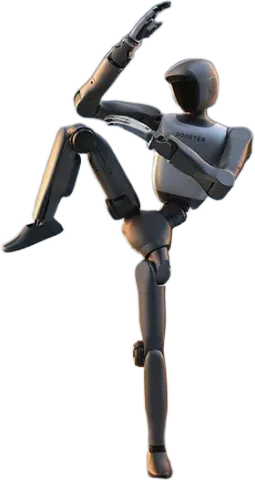
Booster K1
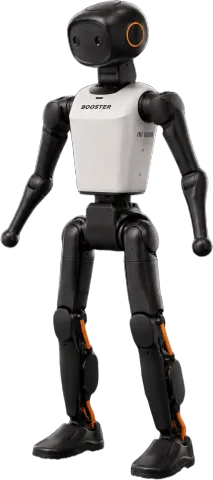
From $4,999Booster K1 is a compact (95 cm, 19.5 kg) bipedal humanoid from Booster Robotics (China), positioned as an entry-level research/education platform with 22 DoF, up to 200 TOPS compute, stereo depth camera, voice interaction, and official walking speed 2 m/s. It is purchasable from distributors from about $4,999 (limited launch offer) to €9,000 or $11,998 depending on region. Its strongest validation is being the platform of the winning team in RoboCup 2025 KidSize league. However, most capability claims (autonomous soccer, balance recovery, durability) are company-asserted without independent verification, and video demos lack transcripts. No hand dexterity, payload, or per-model shipment data is available
Caveat: No hand DoF or dexterous manipulation details are published. Only arms with 4 DoF each and distributor-listed tactile sensors
Noetix N2
From CN¥39,000Noetix N2 is a small Chinese bipedal humanoid (1.2-1.3 m, 20-30 kg, 18 DoF) from Noetix Robotics, known for continuous backflips, running, and low price. Strongest evidence is dynamic mobility demos including backflips and an abuse recovery video, plus reported pre-orders of over 2,500 units and a second-place finish in a humanoid half marathon. However, there is no evidence of manipulation, no autonomous task execution disclosure, no named customers, and specs/price are highly conflicting
Caveat: Height reported as 1.2 m or 1.3 m; weight as 20 kg or 30 kg; max speed as 3.2 m/s, 3.5 m/s, or 11 km/h. No authoritative manufa...
K-Scale K-Bot
$10,999K-Scale K-Bot was an open-source humanoid robot from K-Scale Labs (Palo Alto) with reported specs of 1.4 m height, 34 kg weight, 10 kg payload, 4-hour battery life, modular compute, swappable end effectors, and a starting price of $10,999. It targeted developers with an open-source RL library and sim2real pipeline. The company shipped a small number of Founder's Edition units and demonstrated low-latency teleoperation, but canceled all pre-orders and refunded deposits in November 2025 after failing to raise funding, then open-sourced hardware (CERN-OHL-S-2.0) and software (MIT). No autonomous operation, DoF, walking speed, or independent benchmarks were found
Caveat: Pre-orders canceled and refunded; no active purchase path. The shop URL may be inactive
EngineAI PM01
CN¥88,000EngineAI PM01 is a compact Chinese bipedal research humanoid listed as 1.38 m, about 40 kg, 24 DOF, 2 m/s, with 320-degree waist rotation and a third-party video title claiming a front flip. Official sources confirm the platform and an official introduction video, but no payload, runtime, battery, hands, sensors, autonomy task execution, manipulation, or named customer deployments have been found. Price is uncertain: a third-party video title says $13,700, while a commonly cited 88,000 yuan launch price belongs to SE01, not PM01. Treat as a purchasable motion/research platform with low confidence on reliability and commercial readiness
Caveat: No official PM01 price found. Third-party YouTube title says $13,700; The Robot Report's 88,000 yuan price refers to SE01, not...
Unitree G1
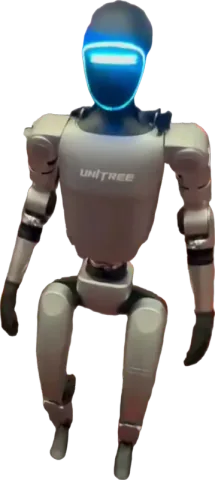
$13,500Unitree G1 is a current, publicly listed humanoid research platform with strong accessibility evidence and multiple real-hardware research papers. Its commercial deployment proof is weak, and base versus EDU configuration differences must not be merged
Caveat: The base model, EDU model, optional hands, tactile arrays, and secondary-development compute differ materially
NAO
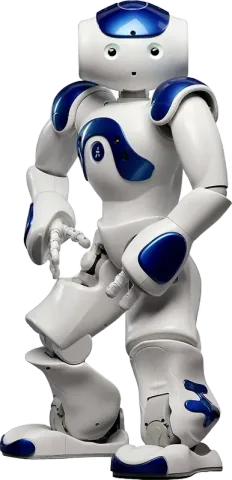
$16,990NAO V6 is a 58 cm, 5.48 kg, 25-DoF bipedal humanoid sold by RobotLAB for $16,990 and Generation Robots for €10,020 incl VAT. It uses an Intel Atom E3845 with 4 GB RAM, two 5 MP cameras, four microphones, sonar, tactile sensors, and a 62.5 Wh battery rated for 60-90 minutes. About 20,000 units have reportedly been sold in 70 countries; USC has 12 units. It is an education/research platform with Choregraphe, Python, and C++. Autonomy is claimed but not independently benchmarked; video demos exist but were title-only in this review. No payload, walking speed, hand DoF, or manipulation demos were found
Caveat: Six YouTube video sources were provided with titles and dates only; no transcripts or content review was possible
LimX Oli
From CN¥158,000LimX Oli is a pre-order, 165 cm, 55 kg, 31-DoF biped research humanoid from LimX Dynamics, priced from RMB 158,000 (~$21,800). It has dual Intel RealSense depth cameras, a 6-axis IMU, modular design and slide-out battery, but no official payload, runtime, battery capacity or walking speed. The strongest public evidence is a secondary research summary reporting stair climbing of a 33-step spiral staircase in 12 seconds with zero falls, and benchmark returns of 0.85 for velocity tracking. Official video titles claim fully autonomous tennis ball picking and scalable autonomous deployment, but no transcripts or independent verification were found. No named customer deployment exists
Caveat: No payload, runtime, battery capacity, walking speed, step height, incline, turning radius, grip force, joint torque, joint spe...
Booster T2
From €22,500Booster T2 is a purchasable 1.4 m, ~42 kg bipedal humanoid development platform from Booster Robotics, with 31 body DoF, 10 kg dual-arm payload, 140 Nm peak torque, 2 hours walking runtime, 48 V 10 Ah battery, and optional Jetson Thor T5000 2,070 TFLOPS compute. Official sources claim 3 m/s walking while resellers and press claim 2 m/s. A media-described demo video shows walking, fall recovery, and flips, but teleoperation status is not disclosed. The robot is sold by Generation Robots from €22,500 excl VAT and by US resellers from US$32,999; no named customer deployment or independent autonomy verification was found
Caveat: Official page says 3 m/s; resellers and press say 2 m/s
Booster T1
$30,000Booster T1 is a 1.18 m, 30 kg bipedal research humanoid from Booster Robotics with 23 DoF standard (31 grippers, 41 dexterous hands), NVIDIA Jetson AGX Orin compute, ROS 2 SDK, and ~2 h walking runtime. Strongest evidence is RoboCup success: 2025 AdultSize champion and 2026 Large division title. It is purchasable through resellers (~$29,800-$50,925) but Booster publishes no MSRP; payload is only ~0.5 kg per arm, base has no hands, and many specs (walking speed, full sensor list) are not officially published. It is a research/education platform, now superseded by T2/K1 on Booster's site
Caveat: T1 is purchasable through resellers and authorized distributors, but Booster publishes no MSRP. US import authorization after J...
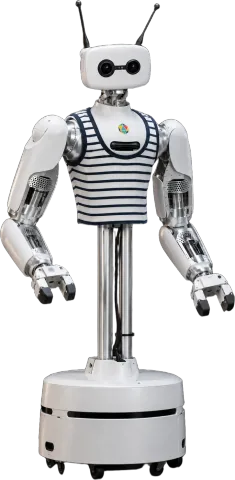
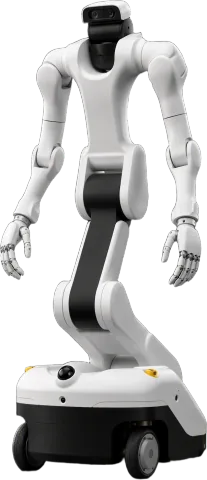
Reachy 2
Reported $70,000Reachy 2 by Pollen Robotics (now part of Hugging Face) is a purchasable open-source upper-body humanoid on an omnidirectional wheeled base. Official specs list 7-DoF arms with ~3 kg payload each, 136-166 cm adjustable height, up to 50 kg, stereo RGB-D, LiDAR, and ROS 2 + Python SDK. Press reports a $70,000 price and use at Cornell, Carnegie Mellon and major AI labs. It is explicitly a lab robot, not consumer, and is teleoperated or Python-controlled; no autonomous or reliability evidence was found. YouTube demos are title-only and cannot be used for capability inference
Caveat: The $70,000 price comes from Decrypt press coverage, not an official price list. The product page invites labs to contact, but...
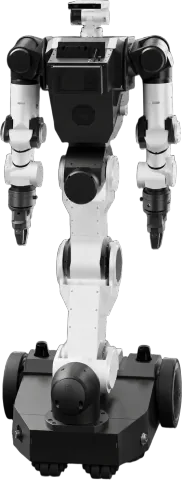
Rainbow Robotics RB-Y1
$80,000Rainbow Robotics RB-Y1 is a wheeled bimanual mobile manipulator (140 cm tall, 131 kg, two 7-DoF arms, ±0.05 mm repeatability, 20/26 DOF, 1.5 m/s) sold as a research platform for $80,000 (commercial $120,000). It has LiDAR for autonomous movement, force/torque sensors, and supports teleoperation via Master Arm or VR. Evidence includes official specs and pre-order announcement, but no named customer deployments, no autonomous task execution, and all video evidence is title-only without transcript or content review. The robot is purchasable but unproven in real-world use
Caveat: All YouTube sources provide only titles; no transcript or video review was possible. Capabilities shown in videos cannot be cre...
Dexmate Vega
$89,999Dexmate Vega 1 Pro is a wheeled humanoid research/developer platform from Dexmate in Santa Clara. It has two 7-DoF arms rated at 5 kg each, a 3-DoF torso reaching to 2.2 m, a 3-DoF head, a 4-DoF omni-directional base (24 total DoF), a stereo RGB head camera, front/rear LiDAR, four base RGB cameras, and NVIDIA Jetson AGX Thor. Dexmate claims 20 hours of runtime and lists the robot as in production and sold to researchers/developers. A media report prices it at $89,999 with a $999 deposit and cites a lead time of about three months. Vega does not include AI; task behavior is built or taught by the customer using Python/C++/Rust APIs and teleoperation tools. No autonomous task execution or observable demo content was found beyond YouTube video titles. Several research labs are named as having used Vega, but no commercial deployment metrics exist
Caveat: Vega 1 Pro does not include AI; it ships as a hardware platform with APIs and teleoperation tools. No autonomous task execution...
Fourier GR-2
$125,000Fourier GR-2 is a second-generation biped humanoid (175 cm, 63 kg, 53 DoF) with 12-DoF tactile hands, FSA 2.0 actuators (peak torque >380 Nm), and developer support for ROS, Isaac Lab, and MuJoCo. Launch coverage from reputable media confirms core specs and teleoperation teaching modes, but no autonomous task execution or customer deployment has been shown. Third-party resellers list it for $125,000, but official pricing is not available. Perception claims of 360-degree RGB camera coverage are reported by one media outlet but not confirmed by Fourier's official launch release
Caveat: No official list price from Fourier; third-party resellers list $125,000
ergoCub
Not for saleergoCub is IIT and INAIL's research humanoid, standing 150 cm tall, weighing 55.7 kg, and designed to reduce physical strain on workers in industrial and hospital settings. Its strongest evidence is a peer-reviewed Nature Machine Intelligence figure showing collaborative payload lifting with a human and live walking on stage. Official IIT sources confirm the 2023 debut and ergonomic purpose, while secondary dossiers report about 10 kg load-bearing, NVIDIA Jetson AGX Xavier plus Intel i7 onboard compute, depth/LiDAR sensing, and research claims such as up to 43% energy reduction and DNN-driven locomotion. However, no battery, runtime, walking speed, total DoF, hand DoF, price, or customer deployment exists in the reviewed evidence; autonomy is mostly simulation-only or title-only
Caveat: No price, lease, or purchase path found. ergoCub is a research prototype and not available to the public
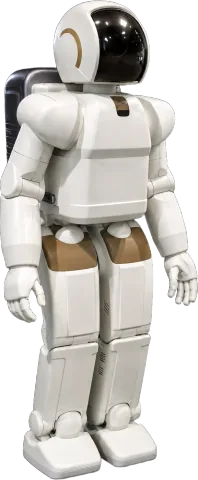
Honda ASIMO
Not for saleHonda ASIMO is a retired bipedal research humanoid, first unveiled in 2000 and final active in 2022. The 2011 final version is reported as 130 cm tall, with 57 DoF, walking at 2.7 km/h and running at 9 km/h, powered by a 51.8V lithium-ion battery. Weight is conflicting at 54 kg or 48 kg. ASIMO demonstrated walking, running, hopping, stair climbing, push recovery, face/voice recognition, and serving drinks, but all evidence is from secondary sources or video titles; no official Honda spec sheet, independent benchmark, or commercial deployment is available. It was never sold, only leased to museums and events, and is not currently purchasable
Caveat: ASIMO is retired and not for sale. There is no public price, purchase path, lease offer, or current order route
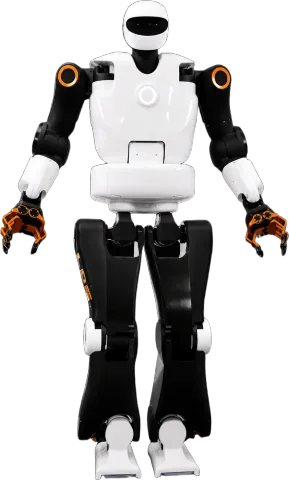
PAL Robotics TALOS
No public pricePAL Robotics TALOS is a full-size biped humanoid (175 cm, 95 kg) introduced around 2017 and sold to research labs. Official evidence confirms 6 kg per-arm payload, 1.5 h walking runtime, torque sensors in most joints, and EtherCAT control loops up to 5 kHz; ROBOTS guide adds 32 DoF, 1080 Wh battery and approximate €900,000 cost. The robot is ROS-based with an open-source URDF under Apache 2.0. However, reviewed public evidence contains no autonomous task demonstration or capability video content beyond titles, and no commercial deployment metrics
Caveat: No official price or online store found; only approximate cost €900,000 from ROBOTS guide and request-a-quote on official page
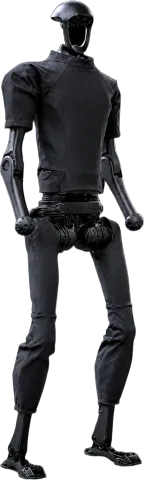
Tiangong
Not for saleTiangong is the first full-size biped from the Beijing Humanoid Robot Innovation Center (X-Humanoid), publicly shown on 2024-04-27 as an open, research-oriented platform: 163 cm, 43 kg, fully electric, with a 48 V/15 Ah pack, 3D vision sensors, a high-precision IMU, six-axis force sensors and a claimed 550 trillion operations per second of onboard compute; a directory records 20 total DoF for the launch configuration. The public evidence is essentially locomotion — a claimed stable 6 km/h run and slope/stair traversal described as 'blind' — with no manipulation (the launch robot is reported to lack human-like hands), no task autonomy, no endurance or reliability data and no human-interaction evidence. It is research-only and not for sale, and has been superseded by later Tiangong variants (1.1 PRO, 1.2 MAX, Walker, Ultra, Omni, 2.0, 3.0) whose records must not be credited to this robot
Caveat: The launch robot is reported to lack human-like hands and no manipulation demonstration exists in the reviewed record
Tiangong Ultra
Not for saleTiangong Ultra is a bipedal humanoid research prototype from Beijing Humanoid Robot Innovation Center (X-Humanoid), standing 1.8 m and weighing 55 kg (or 52 kg per BaiduWiki). It won the world's first humanoid half-marathon in April 2025 (21 km in 2:40:42) and has demonstrated climbing 134 stairs, navigating rough terrain, and sprinting 100m in reported times as low as 8.64s. However, autonomy is only claimed, manipulation and endurance specs are unknown, and the robot is not for sale. Strongest evidence is the half-marathon win with media coverage; weakest is missing manipulation, commercial deployment, and verified autonomy
Caveat: Autonomy claimed for 2025 100m sprint (BaiduWiki) but no intervention logs or independent audit. Half-marathon autonomy not dis...
Unitree H1
No public priceThe Unitree H1 is a full-size bipedal humanoid (about 180 cm, about 47 kg, 18 DoF by Unitree's per-limb counts, 864 Wh swappable battery) sold mainly to research labs through quote-based sales: Unitree's store shows a $90,000 'contact us' anchor and a European distributor lists it from EUR 93,496 excluding VAT. Its strongest public evidence is locomotion and spectacle, including a company-claimed 3.3 m/s record, 1500 m and 400 m golds at the 2025 World Humanoid Robot Games (6:34.40 and 1:28.03) and a second source crediting four track golds, a choreographed 16-robot national broadcast performance, and a company-claimed 10.1 m/s peak from a modified ~62 kg unit. Manipulation is weak: the stock robot ships without hands and with 4-DoF arms, and the manipulation literature (Stanford HumanPlus, CMU H2O) used heavily modified units. Unitree publishes no payload, runtime, failure-rate or deployment metrics; autonomy is asserted for walking and running only; third-party runtime figures conflict (1 h versus 2 h) and no independent benchmark or safety certification exists
Caveat: Unitree publishes no payload for the H1; the 30 kg figure exists only in one directory and the distributor lists the H1 payload...