 Unitree RoboticsChina
Unitree G1
Unitree G1 is a current, publicly listed humanoid research platform with strong accessibility evidence and multiple real-hardware research papers.
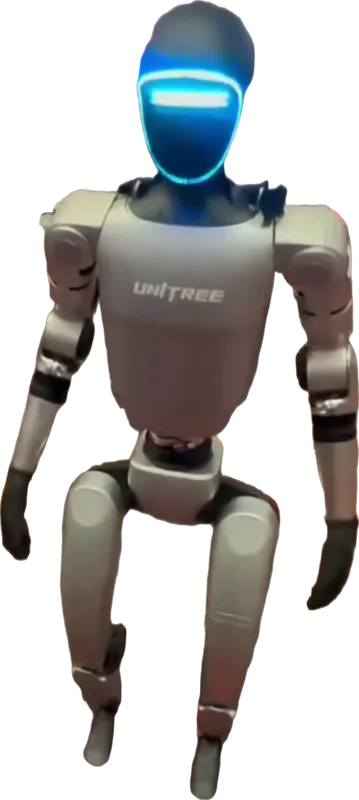
- Height
- 132cm4′4″Source
- Weight
- 35kg77 lbSource
- Payload
- 2kg4 lbSource
- Runtime
- 2h120 minSource
- Degrees of freedom
- 23DoFSource
- Top speed
- 2m/s7.2 km/hSource
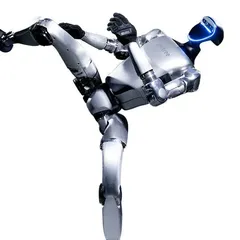

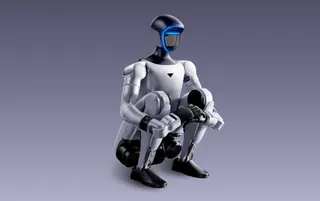
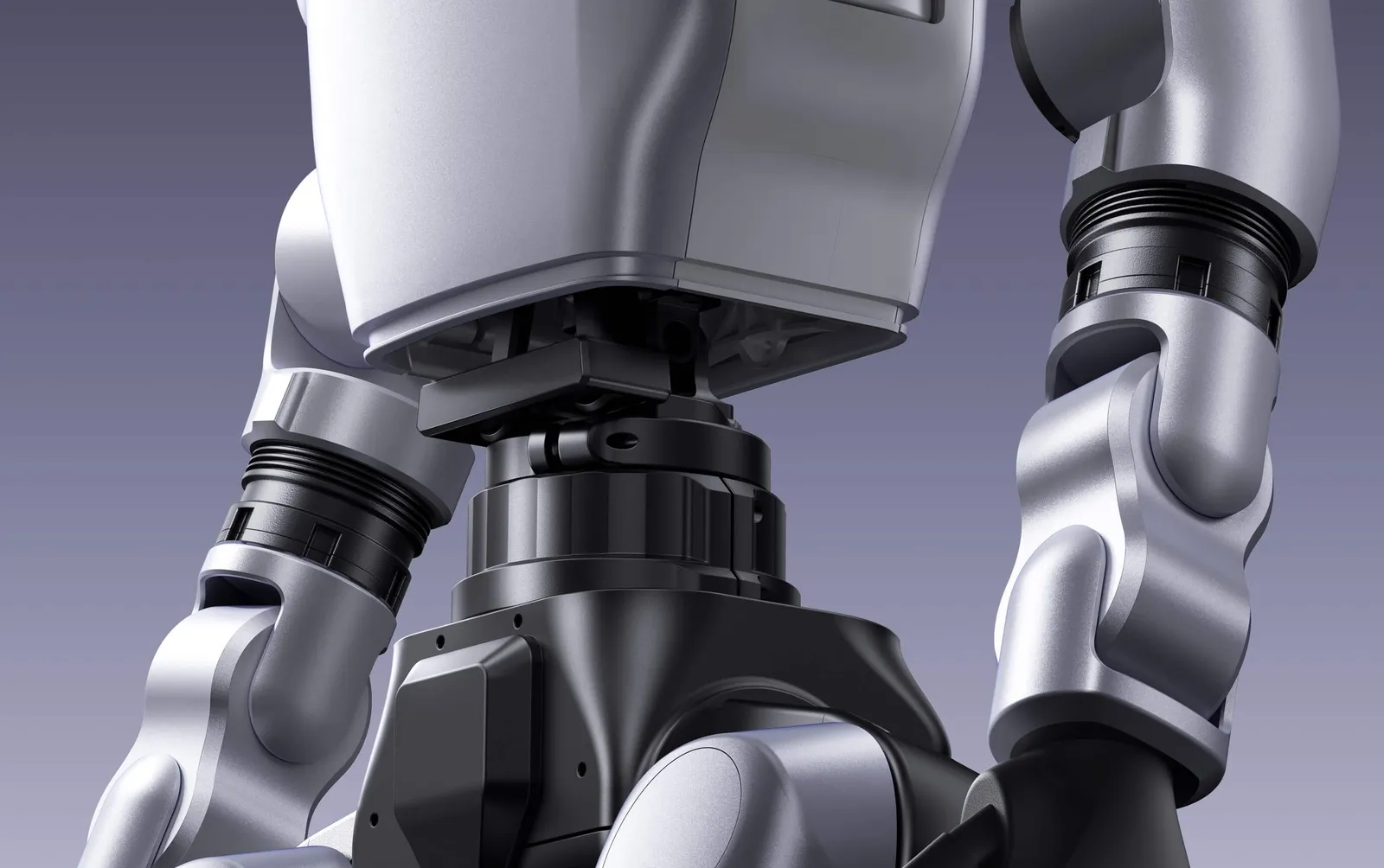
 6 real photos
Unitree G1 photos
credited to the maker or photographer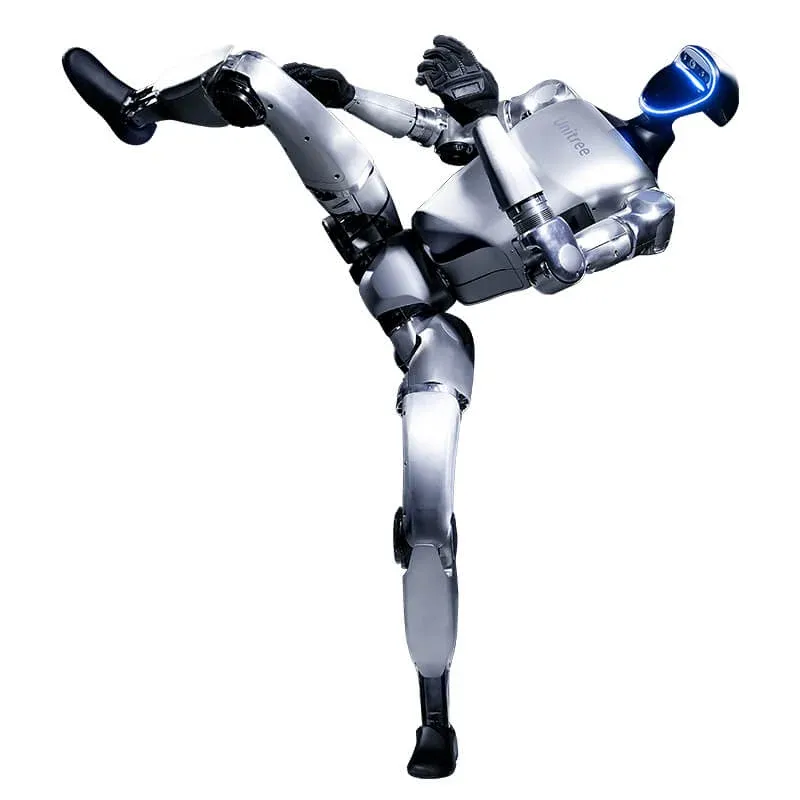
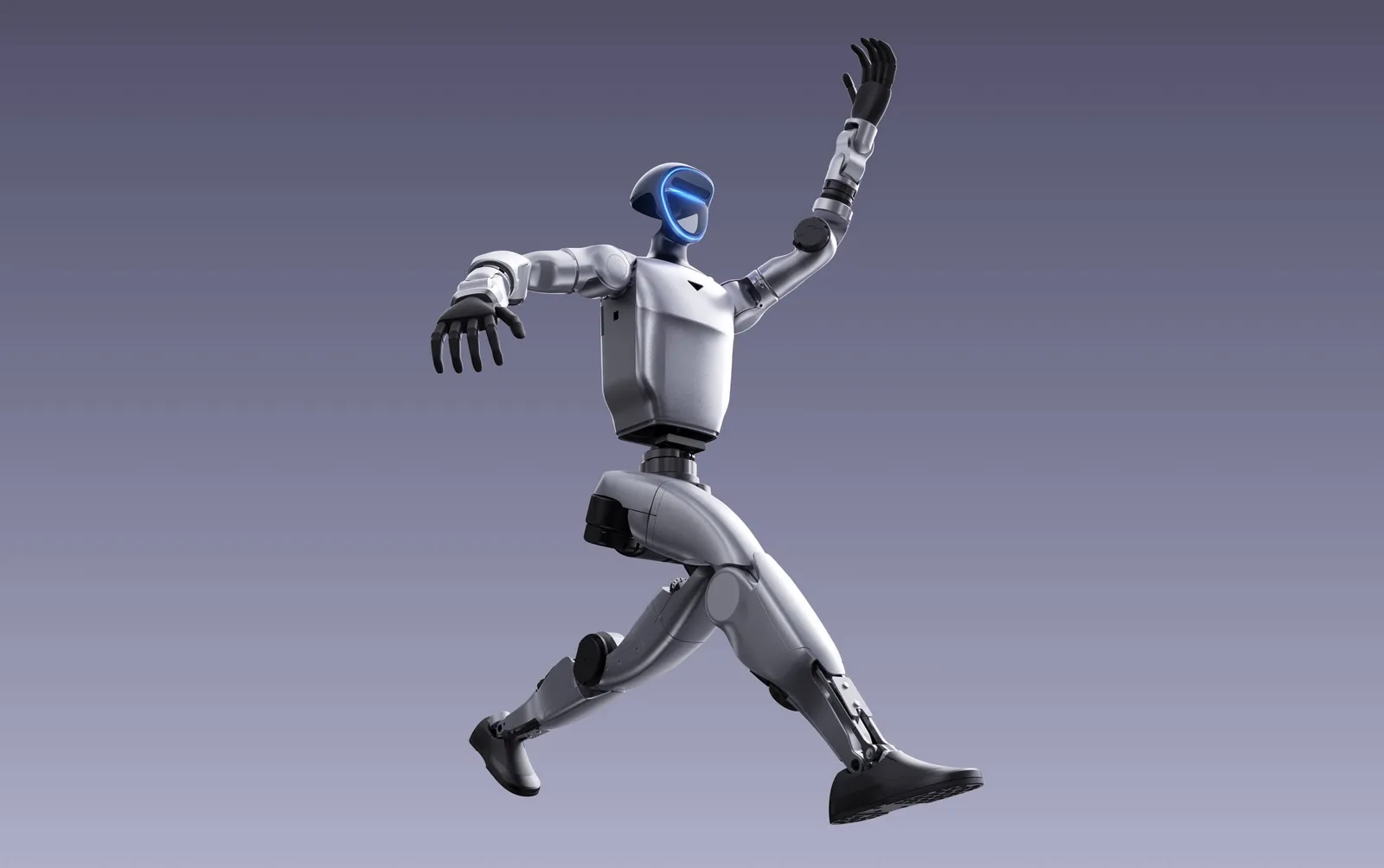
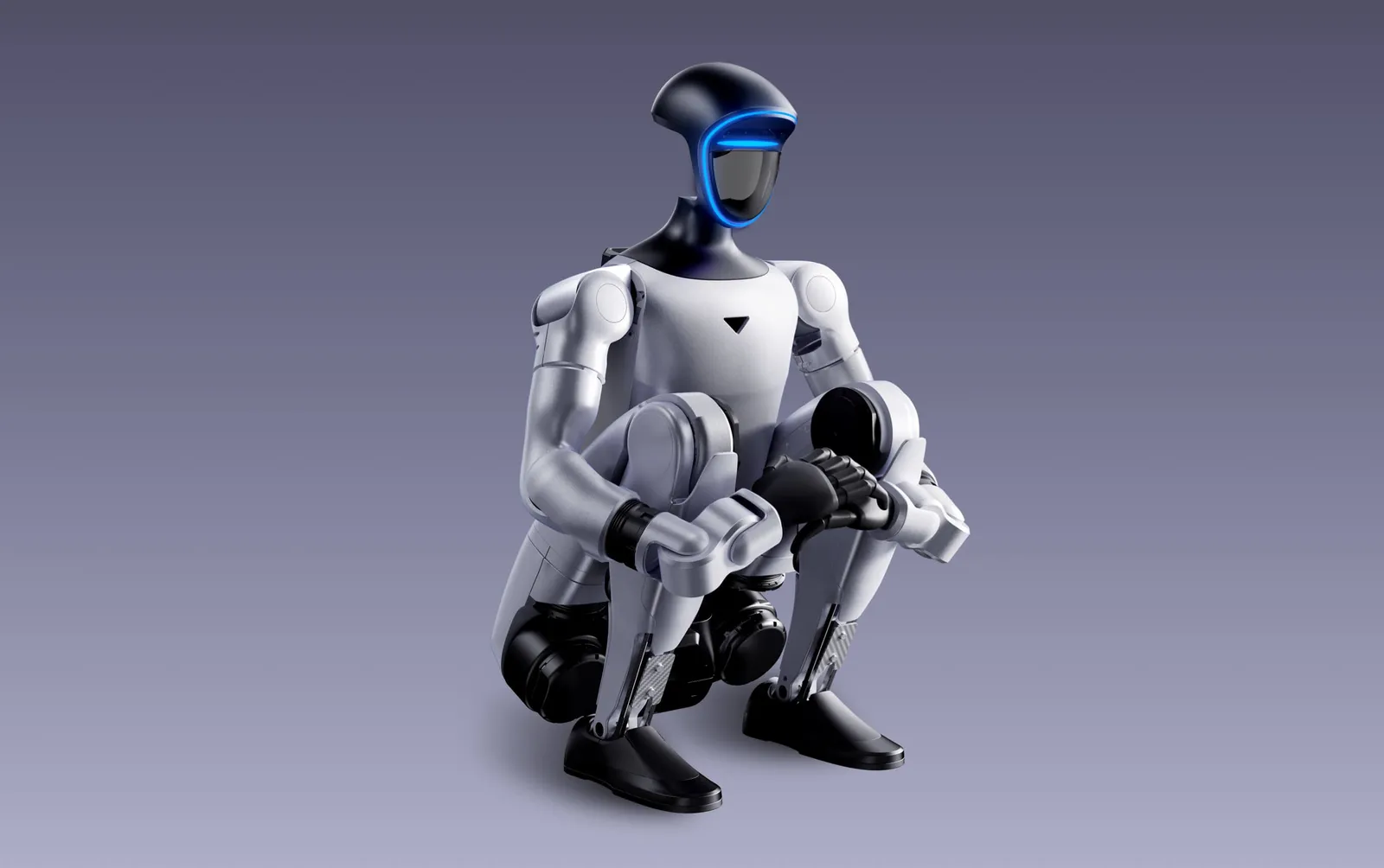
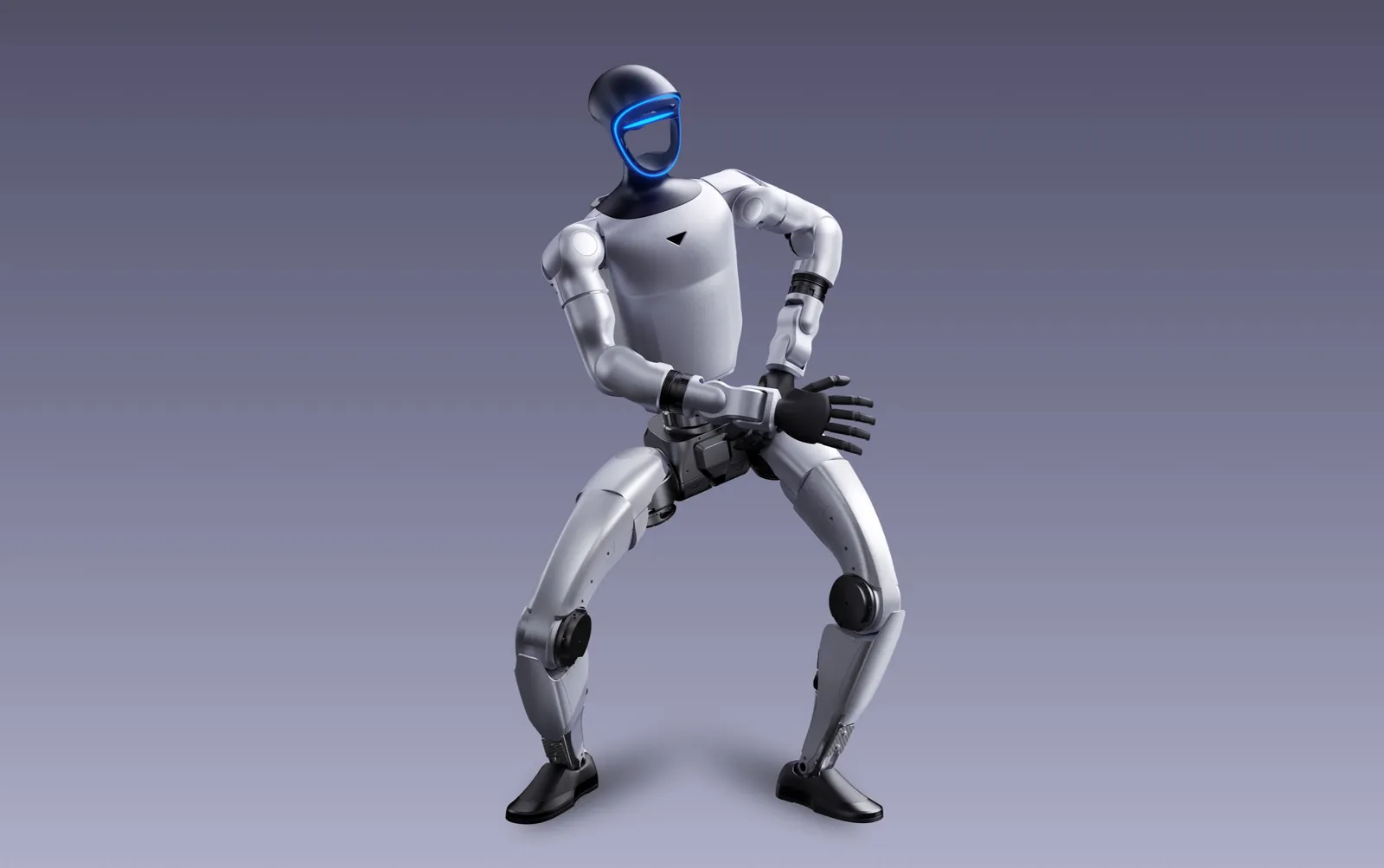
Unitree G1 videos
official and independent footageHow big is Unitree G1?
Unitree G1 stands 132 cm (4 ft 4 in) and weighs 35 kg (77 lb), 43 cm shorter than a 175 cm adult.
Unitree G1 specs
official and sourced figures| Height | 132 cm (4 ft 4 in)source |
| Weight | 35 kg (77 lb)source |
| Payload | 2 kg (4 lb)source |
| Runtime | 2 hsource |
| Degrees of freedom | 23 DoFsource |
| Hand DoF | 7 DoFsource |
| Top speed | 2 m/s (7.2 km/h)source |
| Hands | Base G1 listing has no dexterous hand; EDU options include Dex3-1, a 7-DoF three-finger hand, with optional tactile arrays. |
| Sensors | depth camera, 3D LiDAR, four-microphone array, speaker, Wi-Fi 6, Bluetooth 5.2 |
| Compute | Official page lists secondary development and NVIDIA Jetson Orin for EDU configurations; base model does not include secondary development according to the product table. |
Price and availability
checked 2026-10-14The base G1 can be ordered directly from the Unitree official shop at a listed price, currently marked as backordered. EDU (developer) versions are sold through Unitree sales or US resellers such as RoboStore, RobotShop and Top3DShop.
| G1 Standard (base) | $13,500 |
| G1 Robotic Humanoid (base, reseller) | $17,990 |
| G1 (U1) EDU Standard | $43,900 |
| G1 (U2) EDU Plus | $53,900 |
What the Unitree G1 can do
evidence by capability dimensionBase G1 has arms but no dexterous hands in the shop configuration; EDU options and academic work show G1-based grasping, tray transport, and manipulation experiments.
Academic papers report real-G1 behaviors including self-recovery, RGB-based loco-manipulation, tray transport, and structured grasping tasks.
Official specs establish a compact biped platform, and research reports real-G1 self-recovery from face-up and face-down falls across varied surfaces.
Official specs list depth camera and 3D LiDAR; academic work reports RGB-based loco-manipulation and visual grasping experiments on G1.
Official specs list a microphone array and speaker, but no strong public evidence of robust conversational interaction was found.
Official page lists about 2 hours of runtime and an 8-month base warranty, but no fleet reliability or commercial operating-hour data was found.
G1 is a compact biped humanoid sized for indoor research and human-designed lab environments, with public research demonstrations on real hardware.
What is proven
source-backed highlights- Official public price and order page.
- Technical papers using real G1 hardware.
- Compact biped form and useful research sensor suite.
Caveats
read before you trust a demo- The base model, EDU model, optional hands, tactile arrays, and secondary-development compute differ materially
- No commercial production deployment with output or hours.
- Base versus EDU ambiguity.
- No independent endurance benchmark.
About the Unitree G1
summary from sourced evidenceUnitree G1 is a current, publicly listed humanoid research platform with strong accessibility evidence and multiple real-hardware research papers. Its commercial deployment proof is weak, and base versus EDU configuration differences must not be merged
Evidence log
tiered public claimsGuides about the Unitree G1
Unitree G1 alternatives
all alternatives →| Robot | Status | Price | Rating |
|---|---|---|---|
| Purchasable | From €22,500 | ||
| Purchasable | CN¥88,000 | ||
| Purchasable | From CN¥158,000 | ||
| Purchasable | $4,900 | ||
| Purchasable | $16,990 | ||
| Purchasable | From CN¥39,000 |








Unitree G1 FAQ
answers from sourced dataHow much does the Unitree G1 cost?
The official shop lists the G1 Standard at $13,500 before shipping ($300 to $1,200) and import duties. US reseller prices for the base model are higher, for example $17,990 at RoboStore.
Can you buy the Unitree G1?
Yes. The base G1 is listed on the Unitree official shop at $13,500, though it was marked as backordered when checked. EDU versions are sold through Unitree sales and US resellers.
How tall is the Unitree G1?
The Unitree G1 is 132 cm (4 ft 4 in) tall according to Unitree Robotics's published specs.
How much does the Unitree G1 weigh?
It weighs 35 kg (77 lb) according to official specs.
How long does the Unitree G1 battery last?
Unitree Robotics lists a runtime of about 2 h per charge. This is a company figure, not an independent test.
Who makes the Unitree G1?
The Unitree G1 is made by Unitree Robotics, based in China.
What is the difference between the G1 base and G1 EDU?
Unitree says the standard G1 does not support secondary development. The EDU versions add developer access and options such as dexterous hands and onboard compute, and cost about $43,900 to $73,900 at US resellers.
Was the G1 cheaper or more expensive at launch?
Unitree announced the G1 in May 2024 at $16,000 excluding tax and shipping. The official shop now lists the base model at $13,500.
Can you rent a Unitree G1?
Yes. ZMP Robots rents the G1 from $299 per day with a 3-day minimum, or from $1,875 per day for an event with an operator.
Sources
12 references- Unitree G1 · Unitree Robotics
- Unitree G1 Humanoid Agent · Unitree Robotics Shop
- Unitree Robotics Introduces G1 Humanoid Agent AI Avatar · Unitree Robotics via PR Newswire
- Unitree G1 humanoid robot and Go2 robot dog presented at World Robot Conference · Unitree Robotics
- Humanoid Getup Control Across Diverse Postures and Surfaces · arXiv
- VIRAL: Visuomotor Policies for Agile Humanoid Loco-Manipulation · arXiv
- SteadyTray: Humanoid Whole-Body Control for Object Transportation · arXiv
- Foundation-Model Grasping Pipeline on Unitree G1 · arXiv
- Robots · UCL Robot Perception and Learning Lab
- Unitree G1 Edu material · William Paterson University
- Unitree Robot Exploit · IEEE Spectrum
- Cybersecurity Assessment of Unitree Robots · arXiv