


























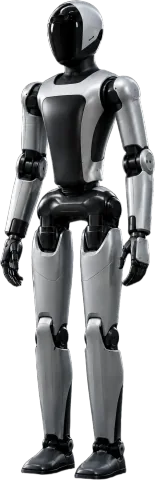
The short answer
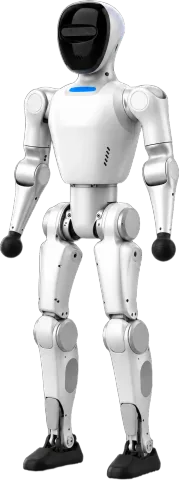
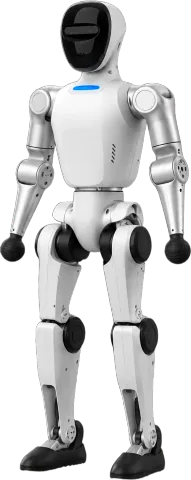
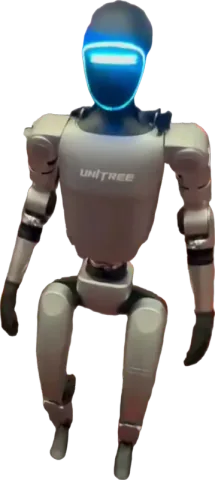
The cheapest walking humanoid you can order from an official store outside China is the Unitree R1 Air at $4,900, listed on the Unitree shop when we last checked on October 14, 2026. The Booster K1 launched at a $4,999 starting price, though most regional dealers now ask more. Inside China, the Noetix Bumi went on sale at 9,998 yuan, about $1,400, but we found no official way to buy one from abroad.
Those headline prices hide a lot. The cheapest versions of most robots cannot be programmed, ship without useful hands, and run for an hour or less. The table above sorts every robot by its lowest public price. This guide explains what those prices actually buy, what they leave out, and how to avoid paying twice.
What each price tier actually gets you
We grouped the robots in our database by the lowest price a normal buyer can pay. Prices are list prices before shipping, tax and import duties unless noted.
| Budget | Robots in this tier | What you get | What you do not get |
|---|---|---|---|
| Under $1,000 | Reachy Mini ($399 Lite, $499 Wireless) | A 28 cm desktop robot with a 6-DoF head, camera, microphones, Python SDK | Legs, arms or hands. It is a humanoid face on a desk |
| $1,000 to $5,000 | Noetix Bumi (China only), Unitree R1 Air ($4,900), Booster K1 (launched at $4,999) | A small biped that walks, dances, talks and can fall and get up | Programming on the base Unitree model, any real payload, dexterous hands |
| $5,000 to $10,000 | Unitree R1 ($5,900), Noetix N2 (from 39,000 yuan in China), US-dealer R1 ($8,990) | Better compute, faster walking, more motion tricks | Hands that can grasp household objects; runtime beyond about an hour |
| $10,000 to $20,000 | R1 EDU ($10,500), EngineAI PM01 (88,000 yuan launch), Unitree G1 base ($13,500), NAO ($16,990), 1X NEO ($20,000 preorder) | SDK access (R1 EDU, PM01, NAO), a 1.3 m robot (G1), or a home-focused preorder (NEO) | A programmable G1; that starts at $43,900 at US resellers |
| $20,000 to $50,000 | AgiBot X2, Booster T2, Unitree H2, G1 EDU, AgiBot A2 Lite ($44,560) | Full-size or research-grade platforms with SDKs and optional dexterous hands | Proven, unsupervised useful work in homes or factories |
Two points stand out. First, the jump from “walks and dances” to “can be programmed to do something new” usually costs two to four times the base price. Second, nothing under $20,000 has public evidence of doing chores. If that is your goal, read our guide to humanoid robots for the home before spending anything.
Base vs EDU: the price gap that matters most
Most Chinese makers sell a consumer or “base” version and a developer or “EDU” version. The base version is the one in the headlines. The EDU version is the one researchers actually buy.
| Robot | Base price | Developer price | What the developer version adds |
|---|---|---|---|
| Unitree R1 | $4,900 (Air), $5,900 (R1) on the official shop | $10,500 (R1 EDU) on the official shop; $15,950 at US dealer RoboStore | Secondary development (SDK). Unitree says only the EDU version supports it |
| Unitree R1 EDU Pro | n/a | From $18,900 with dummy hands, up to $32,900 with tactile dexterous hands (RoboStore) | Real hands. The hand option alone can add $14,000 |
| Unitree G1 | $13,500 on the official shop; $17,990 at RoboStore | $43,900 (EDU Standard U1) to $73,900 (EDU Ultimate D) at RoboStore | SDK access, more compute, dexterous hand options. Unitree itself asks EDU buyers to contact sales |
| Unitree H2 | $29,900 listed on the official shop, not orderable when checked | $68,900 (H2 EDU) at US dealers | Secondary development |
| Booster K1 | Geek edition, about 20 minutes walking | Education and Professional editions, 70 minutes walking, up to 200 TOPS compute | Battery and compute. All editions support Python and C++ |
| AgiBot X2 | $24,240 (standard X2) | Pro and Ultra versions | Per reporting cited in our data, the base X2 does not support secondary development |
The Unitree shop states plainly that the base G1 “does not support secondary development.” That means you get the factory behaviors and the remote, and nothing else. For a university lab, a base G1 at $13,500 is the wrong purchase; the right comparison is the EDU at $43,900 or more. You can see the full configuration list on the Unitree G1 price page and the Unitree R1 price page, or compare the two in Unitree G1 vs Unitree R1.
The cheapest robots, one honest line each
- Noetix Bumi (9,998 yuan, about $1,400). A 94 cm, 12 kg robot for children’s education and family entertainment. Noetix says it is not built for chores. Robozaps reports it sold out and stayed China-only.
- Unitree R1 Air ($4,900). The cheapest humanoid with a global checkout. Strong mobility demos, no independent task benchmark, and no SDK unless you pay for the EDU.
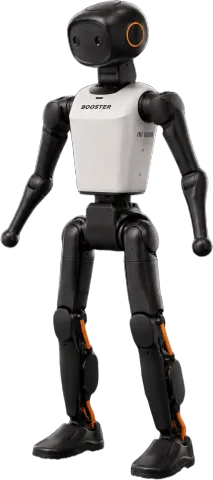
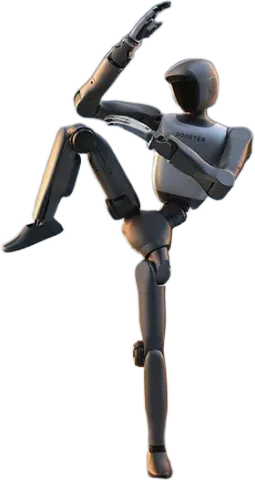
- Booster K1 ($4,999 at launch). A 95 cm research platform that won RoboCup 2025’s KidSize league, according to Generation Robots, which sells it from EUR 7,500 excl. VAT. The best cheap choice if you want an SDK on every edition. See Booster K1 vs Unitree R1.
- Noetix N2 (from 39,000 yuan). Known for backflips. Reported prices conflict: some outlets say 39,000 yuan, TMTPost reported 59,900.
- EngineAI PM01 (88,000 yuan launch price). A 1.38 m open platform. The Robot Report described the launch price as promotional; prices outside China are higher.
- Unitree G1 ($13,500 base). The best-rated robot in this price range on our leaderboard, with a B+ evidence grade. The base model cannot be programmed.
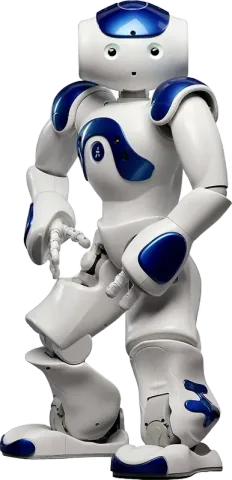
- NAO V6 ($16,990 at RobotLAB, EUR 8,350 excl. VAT at Generation Robots). Old, small and well supported in schools. Maxvision of Shenzhen bought Aldebaran’s core assets in July 2025, so long-term support depends on the new owner.
Hidden costs that change the real price
The sticker price is rarely what you pay. These are the costs we see most often in seller terms.
| Cost | Typical amount | Where it comes from |
|---|---|---|
| Shipping from China | $300 to $1,200 on the Unitree shop; $500 to $3,000 on the AgiBot store | Official store terms |
| Import duties and customs clearance | Paid by the buyer on official Chinese stores | Unitree and AgiBot store terms |
| VAT in Europe | About 20% on top of excl.-VAT prices; Generation Robots lists the R1 from EUR 15,000 excl. VAT, EUR 18,000 incl. | EU reseller listings |
| SDK access | $4,600 more for R1 EDU vs R1; $30,000+ more for G1 EDU vs base | Official shop and US dealer prices |
| Hands | $10,000 to $14,000 for dexterous hands on R1 EDU Pro | RoboStore configuration prices |
| Reseller margin | About $4,000 more for a base G1 at RoboStore vs the official shop | Listing prices on the same day |
| Spare batteries and chargers | Not priced on most pages; ask before buying | Seller quotes |
| Repairs after a fall | Not published; this is the cost most buyers underestimate | Ask for a parts price list |
Our rule of thumb from these listings: budget 15% to 30% above the official sticker for a robot shipped from China, and expect to pay a reseller premium if you want local stock and someone to call.
Where to buy safely
Official stores. Unitree, AgiBot and Hugging Face run their own online shops with fixed prices. You get the lowest price and the manufacturer’s terms, and you handle shipping, customs and returns yourself. Stock status changes often; the base G1 and the white R1 Air were both backordered when we checked.
Authorized dealers. RoboStore describes itself as the official US distributor of Unitree. RobotShop, Top3DShop, RobotLAB and US Robot Store in the US, and Generation Robots in the EU, also list these robots. They charge more, but they handle import, sell from local stock and give you a local contact for warranty claims. Ask any dealer to confirm in writing that it is authorized by the manufacturer.
Marketplaces. Unitree robots have also appeared on AliExpress and eBay. A marketplace listing is only as good as the seller behind it. Check whether the unit is new, which version it is (base or EDU), and whether the warranty transfers.
US buyers and the FCC rule. On July 28, 2026, the FCC added foreign-produced humanoid and quadruped robots to its Covered List. According to The Humanoid Group’s summary, the action blocks new FCC equipment authorizations for these models but does not stop retailers selling previously authorized models or affect robots buyers already own. Rest of World reported that new foreign-made models need US assembly with at least 65% domestic content by value. In practice, robots already on US shelves can still be sold, but newly launched Chinese models may never get a US listing. Ask the seller for the FCC ID before you pay. Separately, US import tariffs on Chinese goods change often; ask a customs broker or the dealer for the current duty rate.
EU buyers. Buying from an EU dealer usually means the price already includes import handling, and the robot comes with an EU contact. Buying direct from China means you pay VAT and any duty on arrival. Compare the incl.-VAT dealer price with the official price plus shipping plus 20%.
What cheap humanoids cannot do
We rate robots on public evidence, and the evidence for the cheapest tier is thin. Here is what our data says these robots cannot do today.
- Chores. No robot under $20,000 has public evidence of doing laundry, dishes or tidying. Noetix says Bumi is not designed for household labor.
- Carry things. None of the sub-$10,000 robots publishes a payload figure. The K1 has 4-DoF arms and no hand DoF published.
- Work for long. The Booster K1 Geek edition walks for about 20 minutes. NAO lasts 60 to 90 minutes. Most small bipeds land around one hour.
- Run without supervision. Every cheap robot we track is controlled by remote, app or scripted behaviors. None has an independent autonomy benchmark.
- Get programmed in the base version. Unitree’s base R1, G1 and H2 lock out secondary development.
What they do well: walking, balance, falling and getting up, dancing, talking through voice AI, and serving as a platform for students learning robotics. If that list matches your plan, the cheap tier is good value.
Kits, DIY and open-source options
If you can 3D print and solder, you can build a small humanoid for less than most commercial ones.
| Option | Cost | Size | Status |
|---|---|---|---|
| Berkeley Humanoid Lite | About $4,312 in US parts ($3,236 in China) | 0.8 m, 22 actuators | Open CAD, firmware and training code; about 30 minutes runtime |
| ToddlerBot (Stanford) | Under $6,000 | 0.56 m, 3.4 kg, 30 DoF | Open-source design, 3D printed, off-the-shelf parts |
| Reachy Mini | $399 Lite, $499 Wireless | 28 cm desktop | Ships as a DIY kit; Hugging Face calls it early development with no warranties |
| K-Scale K-Bot | Was $10,999; no longer sold | 1.4 m | K-Scale cancelled all pre-orders and refunded deposits in November 2025 and released its hardware (CERN-OHL-S-2.0) and software (MIT) |
The K-Scale story is a useful warning. A low price from a young company is a bet on that company surviving long enough to ship and support the robot. Deposits came back in that case; they will not always.
Buying checklist
- Write down the one job the robot must do. If it is “help around the house,” stop and read the home guide.
- Decide whether you need an SDK. If yes, price the EDU version, not the base.
- Check the hands. Ask whether the price includes dexterous hands, simple grippers or placeholder hands.
- Get the landed price: list price, shipping, duties, VAT, and any dealer handling fee.
- Confirm stock and lead time in writing. Backordered official items can wait months.
- Ask for the warranty length, what it covers (falls usually are not), and where repairs happen.
- Ask for prices of a spare battery and the parts that break first.
- In the US, ask for the FCC ID and confirm the model was authorized before July 28, 2026.
- Check the robot’s evidence grade on our methodology page and its profile, not only the marketing video.
- Pay with a method that offers buyer protection. Avoid wire transfers to sellers you cannot verify.
What about Tesla Optimus?
Many people searching for a cheap humanoid are waiting for Tesla. Musk said at the October 2024 We, Robot event that Optimus could cost $20,000 to $30,000 at scale. That is a target, not a price. In its Q3 2026 update, Tesla said production had started on lines in Fremont, and Musk said deliveries to outside companies should start around the end of 2027. There is still no public price, preorder or consumer date. Our Tesla Optimus price guide tracks every statement.
If you need a robot this year, the cheapest real options are the ones in the table above. For a broader view of costs across all tiers, see our humanoid robot price guide or filter by budget in the robot finder.
- Unitree R1 product page · Unitree Robotics (official shop)
- Unitree G1 product page · Unitree Robotics (official shop)
- Booster Robotics Launches K1: A RoboCup-Winning Humanoid for $5,000 · Humanoids Daily
- Booster K1 humanoid robot · Generation Robots
- Beijing startup Noetix Robotics launches consumer-grade humanoid robot at $1,400 · Robotics and Automation News
- Reachy Mini · Hugging Face
- Unitree R1 humanoid robots · RoboStore
- Unitree G1 humanoids · RoboStore
- Unitree R1 humanoid robot · Generation Robots
- Noetix Bumi review · Robozaps
- Noetix N2 coverage · TMTPost
- EngineAI releases PM01 humanoid robot for commercial, educational use · The Robot Report
- Programmable humanoid robot NAO V6 · Generation Robots
- Maxvision buys core robot assets, including NAO and Pepper, from Aldebaran · The Robot Report
- AGIBOT A2 Lite · AgiBot (official store)
- Unitree R1 humanoid hits AliExpress with a $4,900 price tag · RoboHorizon
- FCC Adds Foreign-Made Humanoid and Quadruped Robots to Its Covered List · The Humanoid Group
- U.S. ban on Chinese robots strands American startups · Rest of World
- K-Scale Labs cancels K-Bot orders, open-sources all IP after funding fails · Humanoids Daily
- Berkeley debuts $5,000 open-source humanoid built with desktop 3D printers · R&D World
- ToddlerBot: Open-Source ML-Compatible Humanoid Platform for Loco-Manipulation · arXiv
- Tesla robot: what to know about Optimus · Built In
- Tesla Starts Optimus Robot Production in Fremont · Technology Org