









The short answer
You can order a humanoid robot for your home today, but you cannot yet buy one that reliably does housework by itself. The only home humanoid with a public price and a US delivery plan is the 1X NEO: $20,000 to own or $499 a month, with a $200 refundable deposit. When the Wall Street Journal tested it, the household work it observed was reported as 100% teleoperated by a remote 1X employee. Figure’s best public result is a 56% zero-shot success rate on three tidying tasks in 30 rented homes, with no consumer product attached.
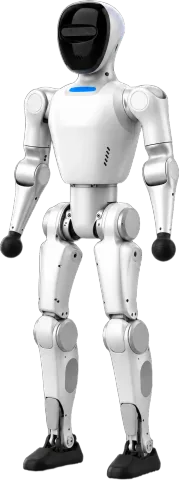
The list above shows the robots our database files under home and entertainment. Most of them are toys, show robots or prototypes. This guide covers the robots people actually mean when they search for a robot butler, what they can do, what they cost to live with, and who should buy now.
What home humanoids can do in 2026, task by task
Demos make every task look solved. Here is what the public evidence supports.
| Task | Best public evidence | Who did it | Autonomous? |
|---|---|---|---|
| Laundry folding | Towel folding and placement in 30 unseen homes | Figure (Helix 2.5, September 2026) | Yes per Figure; 56% success across the three tasks, not independently verified |
| Tidying a room | Picking up 13 to 15 toys into a basket | Figure (Helix 2.5) | Same as above |
| Bed making | Placing pillows and comforter | Figure (Helix 2.5) | Same as above |
| Dishes, laundry, general chores | Marketed on the NEO product page | 1X NEO | Mixed. WSJ testing found observed work teleoperated |
| Picking up socks from the floor | Robot vacuum arm | Roborock Saros Z70 | Yes, poorly: Gizmodo saw one success in over 40 paper-ball tests |
| Cooking, bathroom cleaning, caring for people | Company videos only | Various | No public evidence |
Two caveats apply to every row. First, success rates come from the companies, measured on tasks they chose. Second, 56% sounds high for a lab and low for a home: it means the robot fails close to half the time on simple tasks like folding a towel. No company has published an intervention rate (how often a human has to step in) from real customer homes.
The teleoperation reality
Teleoperation means a human controls the robot from somewhere else. For home humanoids in 2026, it is part of the product.
1X calls it Expert Mode. For tasks NEO has not learned, an owner can schedule an Expert from 1X to remotely supervise the robot. Startup Fortune, summarizing the Journal’s test, reported that operators use Meta Quest 3 headsets and that light rings on NEO’s ears glow when a remote operator is active. CEO Bernt Børnich put it plainly: “If you buy this product, it is because you’re okay with that social contract.” The sessions also become training data for the autonomy 1X is trying to build.
This is a reasonable bet for early adopters who want to help train a new kind of product. It is a poor fit for anyone who expects a robot to work alone from day one, or who is uncomfortable with a stranger seeing inside their home. Our methodology does not credit a robot with a skill when the evidence shows a human doing it remotely.
The main home robots, one by one
1X NEO
| 1X NEO | |
|---|---|
| Price | $20,000 Early Access ownership (3-year warranty, premium support) or $499 per month |
| Deposit | $200, fully refundable |
| Size | 5 ft 6 in, 66 lb |
| Battery | 842 Wh, about 4 hours; plugs itself in, about 6 minutes of charging per hour of runtime |
| Strength | Lifts 154 lb, carries 55 lb |
| Noise | 22 dB, per 1X |
| Availability | US deliveries “start 2026”; international from 2027 |
Source: 1X product page and order page.
heise reported in May 2026 that 1X sold out its first 10,000-unit production batch within five days and was building NEO in Hayward, California, for US delivery by the end of 2026. As of early November 2026, a tracker that checks the order page found no verified customer delivery. NEO is the most serious consumer home humanoid on the market and its specs are unusually complete. Its evidence grade stays low because the best chore footage is company-run and teleoperation-heavy. Compare it head to head in 1X NEO vs Figure 03.
Figure 03
Figure designed Figure 03 for both homes and commercial work, and its first named deployment is industrial: BMW announced in June 2026 that Figure 03 will sort parts in logistics. On the home side, Figure released Helix 2.5 on September 17, 2026, after testing in 30 rented Bay Area homes. CEO Brett Adcock has sketched a home lease of $400 to $600 a month, modeled on car leasing, but gave no start date. In January he predicted robots doing “unsupervised, multi-day tasks in homes they have never seen before”. That is a forecast. There is no Figure preorder, waitlist or price for households.
Tesla Optimus
Tesla said in its Q3 2026 update that Optimus production had started on lines in Fremont, and Musk said deliveries to outside companies should begin around the end of 2027. Tesla did not disclose how many robots it has built, what tasks they do autonomously or how often humans step in. Musk’s price talk, $20,000 to $30,000 at scale, is a target. A home Optimus has no date. Follow it on our Tesla Optimus price guide.
Unitree
Unitree sells to consumers. The Unitree R1 starts at $4,900 on the official shop, and the G1 at $13,500. Neither is a home helper. Base versions cannot be programmed, the hands on cheap configurations are not built for household objects, and runtime is short. They suit hobbyists, coders and families who want a robot to learn with. Compare the two approaches in 1X NEO vs Unitree G1.
The rest of the list
- Noetix Bumi is a 94 cm education and entertainment robot sold in China for 9,998 yuan. Noetix says it is not designed for chores.
- Clone Alpha uses water-powered artificial muscles. Clone takes reservations for 279 units but has shown no complete walking robot.
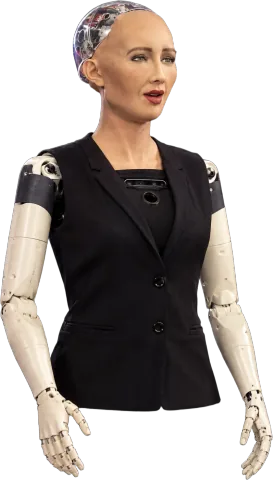
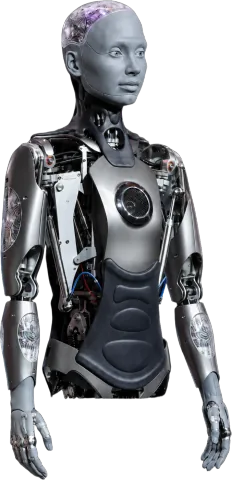
- Sophia, Ameca and AgiBot’s Expedition A3 are social and stage robots for events and research, not homes.
Safety and privacy
A home humanoid is a heavy, mobile, networked device with cameras and microphones. Ask about each of these before you put down a deposit.
Cameras and microphones. NEO has stereo cameras in its head and multiple microphones, and it connects over Wi-Fi, Bluetooth and 5G. That is what lets it work, and what lets data leave your home.
Remote operators. With Expert Mode, a 1X employee can see through the robot’s cameras during sessions you schedule. Reporting on the launch raised questions about who is cleared to operate inside bedrooms and what happens to footage. 1X says owners can opt out of sharing data for training, per a summary of its terms. We found no independent audit of those controls.
Regulation. The US government takes the risk seriously. When the FCC added foreign-made humanoid robots to its Covered List on July 28, 2026, it said networked robots “create extensive vulnerabilities and vectors for attacks”, including surveillance and remote takeover.
Physical safety. 1X says NEO has a soft body, pinch-proof joints and low-inertia tendon drives. Those are good design choices, and they are company claims. We found no independent home-safety certification for any humanoid.
Questions to ask any seller:
- Who can see my camera feeds, when, and from which country?
- How is a remote session shown to people in the room?
- How long is footage kept, and can I delete it?
- Can I set rooms the robot never enters or records?
- What happens if the robot falls on a person or pet, and who is liable?
- Does the robot work if the internet goes down?
Space and power requirements
Home humanoids need more from your home than a vacuum does.
- Floor space and paths. A 5 ft 6 in robot needs doorways, clear paths and somewhere to stand while charging. Clutter on the floor is the hardest problem for robots, so tidy floors help.
- Floors and stairs. At 66 lb, NEO weighs as much as a large dog. 1X publishes company-run stair mobility results; a fall on stairs is the scenario to plan for.
- Charging. NEO plugs itself in. Plan a spot near an outlet away from walkways.
- Electricity. NEO’s battery holds 842 Wh. Charging it fully three times a day would use about 2.5 kWh, which at an assumed 20 cents per kWh is roughly 50 cents a day, or under $200 a year. That is our estimate, not a 1X figure.
- Connectivity. Expect to need stable Wi-Fi in every room the robot works in.
Cost vs hiring help
We compared three years of each option. Robot prices are from the 1X order page and Figure’s public comments. Cleaner prices use Bark’s 2026 national average of $150 per regular cleaning visit.
| Option | Upfront | Monthly equivalent | 3-year total | What you get today |
|---|---|---|---|---|
| 1X NEO, owned | $20,000 | About $556 | $20,000 plus tax and power | Preorder; mixed autonomy and remote operation |
| 1X NEO, subscription | $200 deposit | $499 | About $17,964 | Same, with later delivery |
| Figure home lease (sketched) | Unknown | $400 to $600 | $14,400 to $21,600 | Not offered yet |
| Human cleaner, every two weeks | None | About $325 | About $11,700 | A professional clean, proven |
| Human cleaner, weekly | None | About $650 | About $23,400 | A professional clean, proven |
| Robot vacuum with arm (Roborock Saros Z70) | About $2,600 | About $72 | About $2,600 | Floors cleaned; arm mostly fails per Gizmodo |
On cost alone, a robot starts to make sense only for households that would otherwise pay for weekly help, and only if it does the work alone. Today, a cleaner every two weeks costs less and does more. The robot’s case rests on what it might do in two years through software updates, which is a real but unproven bet.
Non-humanoid robots that do chores today
If you want help now, single-purpose machines are cheaper and proven:
- Robot vacuums and mops handle daily floor cleaning well. Premium models empty their own bins and wash their mops.
- Vacuums with arms are the first step toward picking things up. The Saros Z70 is the best-known example, and reviews show the arm is not ready.
- Dishwashers, washer-dryers and robotic lawn mowers already automate most of the hours a robot butler would save.
A humanoid’s only advantage is that it can, in theory, do all of these with one body in a home built for people. That is the bet you pay for.
Who should buy now and who should wait
Buy now if you:
- Want to be among the first owners and accept that a remote operator will do some tasks.
- Are comfortable with cameras, scheduled remote sessions and data collection in your home.
- Can afford $20,000 or $499 a month without needing the robot to replace paid help.
- Want a programmable robot to learn with, in which case a Unitree or Booster platform from our cheapest humanoid robots list is the better fit.
Wait if you:
- Need reliable, unsupervised help with laundry, dishes or care for a family member.
- Live with young children or frail adults and want independent safety data first.
- Live outside the US; 1X says international expansion starts in 2027.
- Want to see the first independent reviews from real customer homes, which do not exist yet.
We will update this page when the first NEO deliveries are verified and when Figure or Tesla open consumer orders. For everything you can order today, see humanoid robots for sale.
- Order NEO · 1X Technologies
- 1X Neo Robot Sells Out Preorders Even After Teleoperation Reveal · Startup Fortune
- Figure Unveils Helix 2.5 With Zero-Shot Humanoid Generalization Across 30 Homes · The AI Insider
- NEO Home Robot · 1X Technologies
- Roborock Saros Z70 Review: This Robovac's Robotic Arm Is a Swing and a Miss · Gizmodo
- 1X NEO Price, Preorder and Delivery Status · Physical AI Lab
- 1X to deliver humanoid household robot Neo to US customers in 2026 · heise online
- NEO Home Robot announcement · 1X Technologies
- Introducing Figure 03 · Figure AI
- BMW Group deploys Figure 03 humanoid after tests of previous version · The Robot Report
- Inside the Campus: Figure's Plan for 24/7 Autonomy and Leasable Home Robots · Humanoids Daily
- Jogging Bots and Unsupervised Chores: Figure's Aggressive 2026 Roadmap · Humanoids Daily
- Unitree R1 product page · Unitree Robotics (official shop)
- Tesla Starts Optimus Robot Production in Fremont · Technology Org
- Just because Tesla's Optimus is in production doesn't mean it's actually ready · The Verge
- Tesla robot: what to know about Optimus · Built In
- Beijing startup Noetix Robotics launches consumer-grade humanoid robot at $1,400 · Robotics and Automation News
- Clone Alpha · Clone Robotics
- FCC Adds Foreign-Made Humanoid and Quadruped Robots to Its Covered List · The Humanoid Group
- House cleaning price guide · Bark